How to Sell a Trabuco Canyon Home With Rural Prep
May 7, 2026
May 7, 2026
Selling a home in Trabuco Canyon is rarely a plug-and-play process. If your property has acreage, slope, septic, a well, shared access, or outbuildings, buyers will often look beyond finishes and ask deeper questions about the land, utilities, and documentation. The good news is that with the right preparation, you can reduce surprises, build buyer confidence, and present your home in a stronger light from day one. Let’s dive in.
A Trabuco Canyon home sale often requires more parcel-specific verification than a typical tract-home resale. In unincorporated Orange County, Orange County Public Works handles services tied to building, grading, subdivision, encroachment inspections, and permit-history research, which makes property-level records especially important.
That matters because rural and canyon properties can vary widely from one parcel to the next. Two nearby homes may not share the same water source, sewage setup, access arrangement, or improvement history. If you assume instead of verify, you risk delays once buyers begin asking questions.
Before your home goes on the market, it helps to confirm the core systems and service sources tied to your parcel. California’s Transfer Disclosure Statement asks direct questions about septic systems, wells, private utilities, shared driveways, encroachments, easements, unpermitted work, drainage, grading, and settlement issues.
For that reason, your seller file should function more like a property package than a standard resale folder. The goal is simple: know how the property works, gather the records you have, and identify any missing pieces early.
One of the first questions buyers may ask is where the property gets its water. The disclosure form asks whether the home is on city water or a well, and whether it uses a private utility or another source.
In Trabuco Canyon, water service should be confirmed by parcel, not assumed by neighborhood name alone. Trabuco Canyon Water District serves Trabuco Canyon and nearby canyon and foothill communities, but service structure can still vary by property.
You should also verify whether the home is connected to sewer or relies on an on-site sewage system. Orange County Public Works describes these systems as using either a trench leach field or a seepage pit, and notes that records such as percolation tests and design plans may be required for certain permits.
If your home has septic, buyers will often want clarity on age, service history, repairs, and any known issues. Pulling those records before launch can make your disclosures more accurate and your listing more credible.
For many Trabuco Canyon sellers, septic and well paperwork becomes one of the most important parts of pre-listing prep. Even when a system is working as intended, missing records can create uncertainty for buyers.
A well-organized file helps show that you have cared for the property and that key systems have not been left to guesswork. It can also help your agent answer questions quickly during the marketing period.
If the property has septic, try to gather:
The Transfer Disclosure Statement specifically asks whether the property has a septic tank and whether you know of any plumbing, sewer, or septic defects. Having records in hand helps you answer carefully and consistently.
If the property has a well or had one in the past, useful records may include:
Orange County Health Care Agency states that permits are required before construction or destruction of a well, and that abandoned wells must be properly sealed. If your parcel includes a current or former well, confirming the file details early is a smart move.
Access can be just as important as the home itself on a canyon property. Buyers may want to know whether the driveway is shared, who maintains it, and whether any recorded easements or access rights affect daily use.
The California disclosure form asks about shared features such as driveways, along with encroachments and easements. On rural parcels, these are not side issues. They can directly affect buyer comfort, financing questions, and the overall pace of the transaction.
Take time to gather and review any documents tied to:
If something has been handled informally for years, that does not always mean buyers will treat it casually. Clear documentation can prevent small concerns from becoming larger negotiation points.
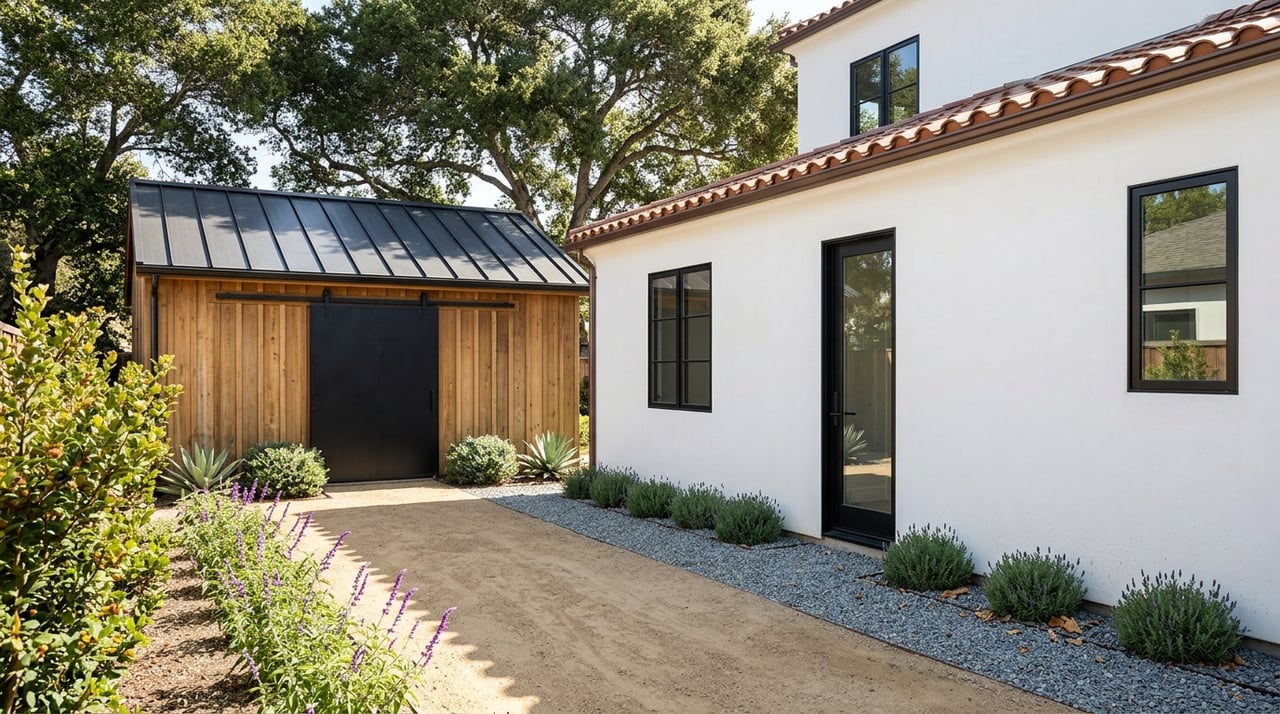
Trabuco Canyon properties often include features beyond the main house, such as detached garages, sheds, barns, patios, grading work, or retaining walls. These improvements may add utility and appeal, but buyers often want to know whether they were properly permitted.
Orange County Public Works notes that zoning, setbacks, floodplain status, and fire-hazard-zone status can affect the design of improvements. It also offers permit-history research, which can be especially useful when records are incomplete or older paperwork is missing.
Before listing, confirm permit history where possible for:
The disclosure form asks whether room additions or structural changes were completed without necessary permits. If you are not fully sure about an older improvement, it is better to investigate before the home is marketed.
Wildfire preparedness is a central issue for many canyon-area properties. Orange County Public Works posted an updated Fire Hazard Severity Zones map for unincorporated areas on May 21, 2025, using factors such as climate data, fire history, topography, and wildfire modeling to classify areas as Very High, High, or Moderate.
California law also requires certain fire-zone disclosures when a property is located in a very high fire hazard severity zone or in a state responsibility area, subject to the statute’s notice rules. For sellers, that makes fire-related preparation both a disclosure issue and a presentation issue.
CAL FIRE describes defensible space as the buffer between a structure and surrounding wildland area. Its guidance breaks that work into Zone 0, within the first 5 feet, Zone 1, within 30 feet, and Zone 2, out to 100 feet.
CAL FIRE also states that 100 feet of defensible space is required by law under Public Resources Code section 4291. It advises maintaining clearance around exposed wood piles, outbuildings, and propane tanks, including 10 feet to bare mineral soil around propane tanks and an additional 10 feet with no flammable vegetation.
When fire mitigation work has been completed, it helps to document it clearly. Buyers may respond well when they can see visible maintenance and organized records, not just hear that work was done.
Strong listing support may include:
OCFA also states that it offers free wildfire home assessments for questions about vegetation management, defensible space, home hardening, or fuel modification. That can be a useful resource if you want clarity before going to market.
In Trabuco Canyon, preparation is often what separates a smooth sale from a stressful one. California Civil Code section 1102 applies to the sale of single-family residential property, and the Transfer Disclosure Statement should be delivered as soon as practicable and before transfer of title.
The same disclosure framework also points sellers toward the kinds of records and expert input that can help limit confusion. Reports or opinions prepared by licensed engineers, land surveyors, geologists, structural pest control operators, contractors, or other experts may help support the disclosure process when property conditions warrant that level of review.
If you are planning to sell, start here:
This kind of preparation does more than fill a file. It helps your home enter the market with clearer answers, fewer surprises, and a better chance of earning buyer trust quickly.
Once the rural details are organized, your sale strategy can work harder for you. A property with canyon-specific features often benefits from thoughtful preparation, polished presentation, and marketing that anticipates the questions buyers are likely to ask.
At The Gipe Group, we believe strong outcomes come from careful planning long before the listing goes live. That includes helping you think through property preparation, presentation, and the documentation that can support a more confident launch. If you’re preparing to sell in Trabuco Canyon, connect with The Gipe Group for senior-led guidance and a tailored strategy.
Stay up to date on the latest real estate trends.



Etiam non quam lacus suspendisse faucibus interdum. Orci ac auctor augue mauris augue neque. Bibendum at varius vel pharetra. Viverra orci sagittis eu volutpat.